MathGoldMedalist
Home
Toolkit
Problems
About
Sign In
Register
Home
Toolkit
Problems
About
Home
›
Toolkit
›
Geometric Approach in Probability
Toolkit 70
Geometric Approach in Probability
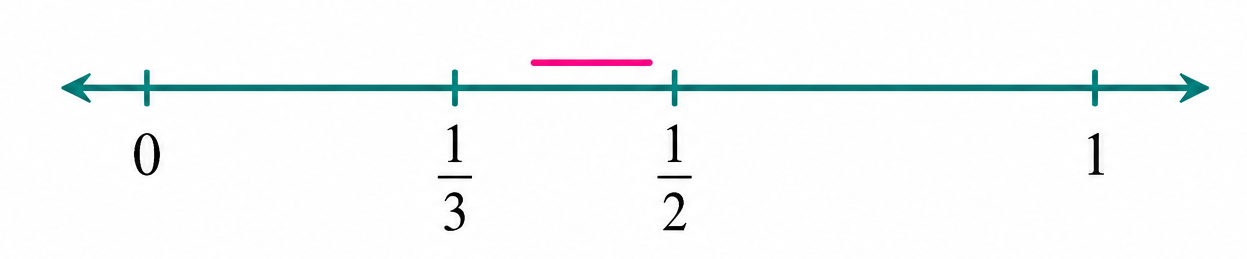
1 dimension
0
≤
x
≤
1
0\le x\le 1
0
≤
x
≤
1
P
(
1
3
<
x
<
1
2
)
=
1
2
−
1
3
=
1
6
P\!\left(\tfrac{1}{3}<x<\tfrac{1}{2}\right)=\tfrac{1}{2}-\tfrac{1}{3}=\tfrac{1}{6}
P
(
3
1
<
x
<
2
1
)
=
2
1
−
3
1
=
6
1
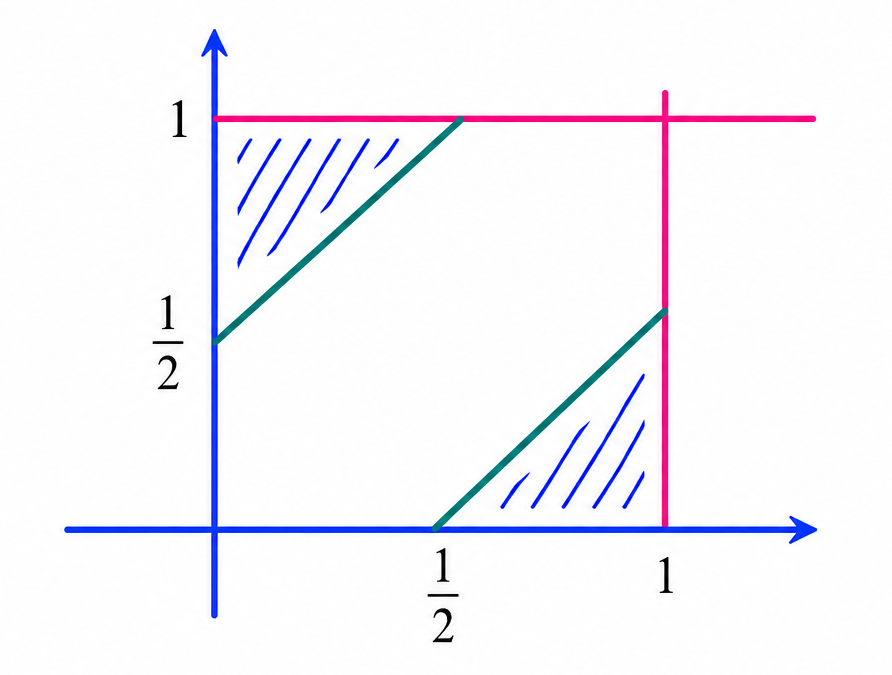
2 dimensions
0
≤
x
,
y
≤
1
0\le x,y\le 1
0
≤
x
,
y
≤
1
P
(
∣
x
−
y
∣
≥
1
2
)
=
2
×
1
2
×
1
2
2
=
1
4
P(|x-y|\ge \tfrac{1}{2})=2\times\frac{\tfrac{1}{2}\times\tfrac{1}{2}}{2}=\tfrac{1}{4}
P
(
∣
x
−
y
∣
≥
2
1
)
=
2
×
2
2
1
×
2
1
=
4
1
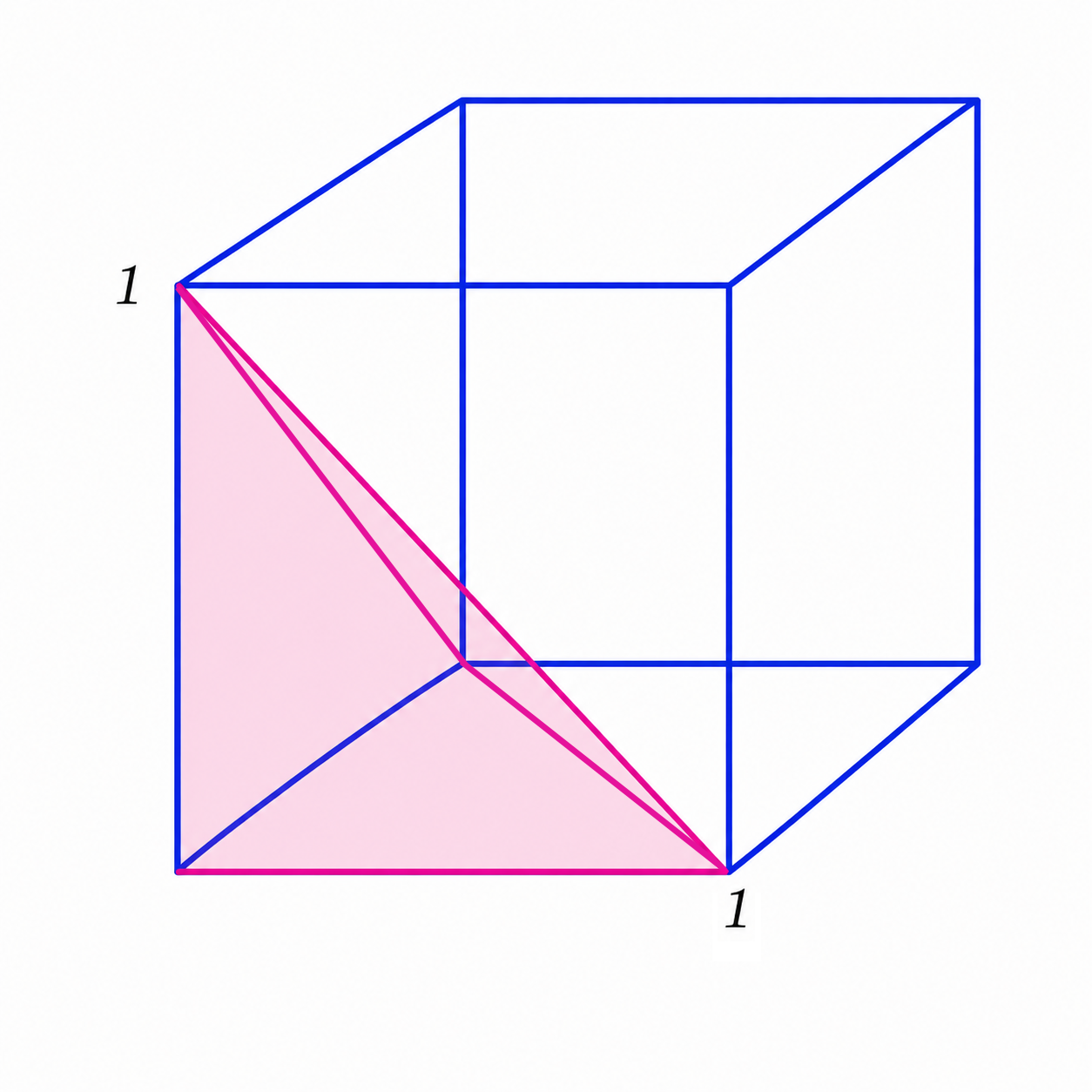
3 dimensions
0
≤
x
,
y
,
z
≤
1
0\le x,y,z\le 1
0
≤
x
,
y
,
z
≤
1
P
(
x
+
y
+
z
≤
1
)
=
1
2
×
1
2
×
1
2
3
=
1
6
P(x+y+z\le 1)=\frac{\tfrac{1}{2}\times\tfrac{1}{2}\times\tfrac{1}{2}}{3}=\tfrac{1}{6}
P
(
x
+
y
+
z
≤
1
)
=
3
2
1
×
2
1
×
2
1
=
6
1
Related Problems
Core
AMC 10B/12B 2024 (Problem 14/9)
AMC 12A 2024 (Problem 20)
←
Back to Toolkit