Derivative
Lesson · Intermediate
Calculus
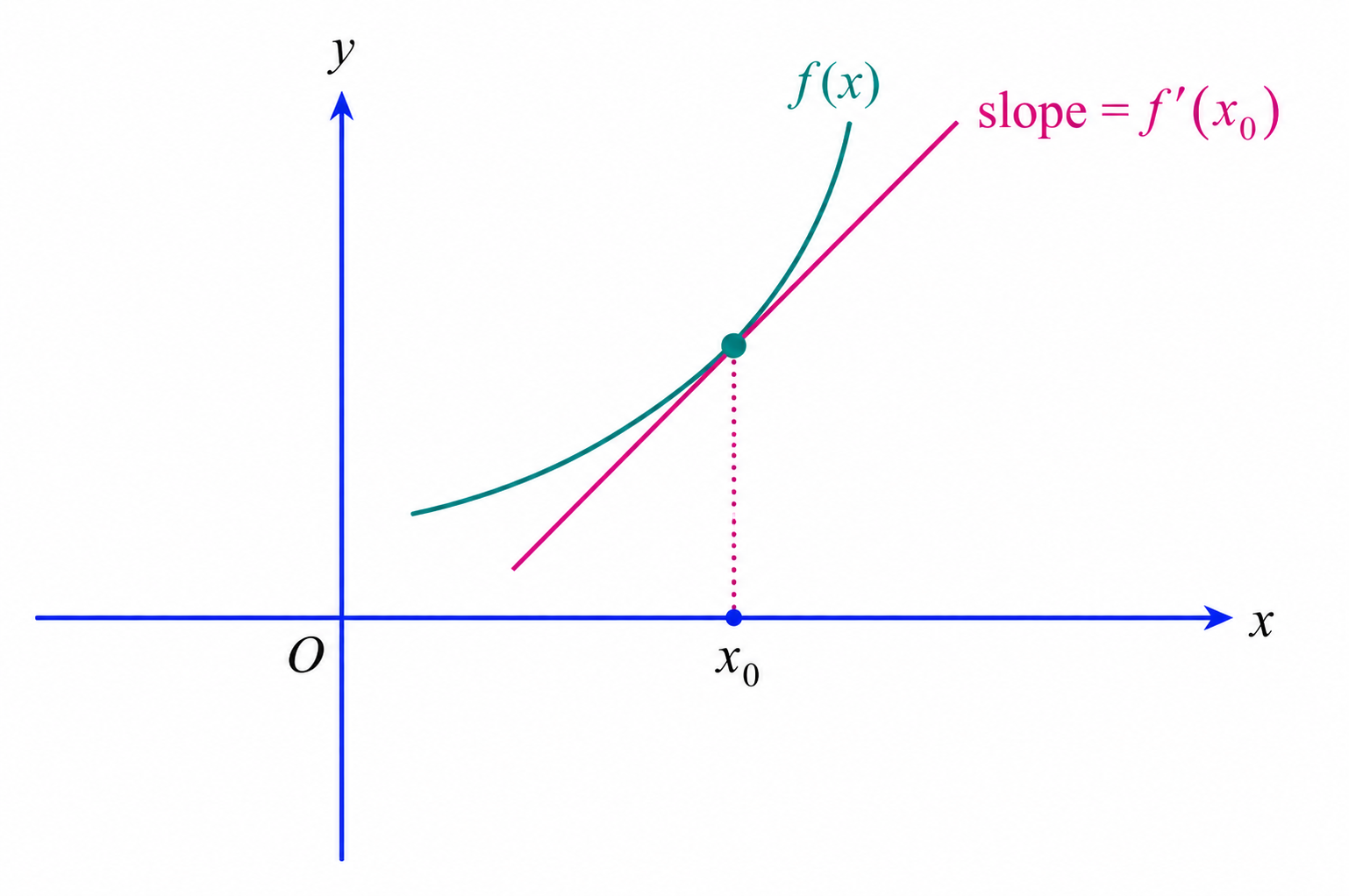
Definition
The derivative represents the slope of the tangent line:
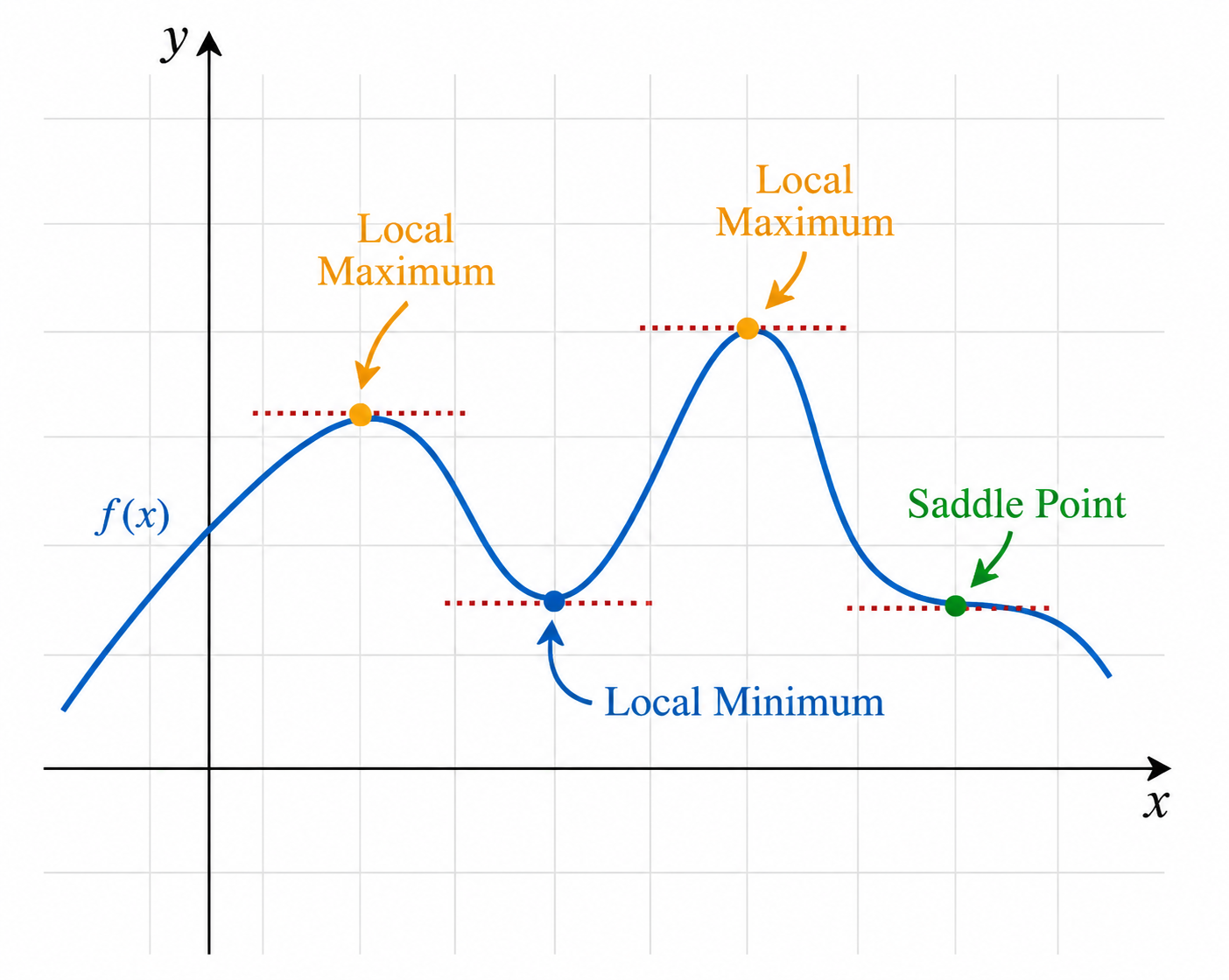
For finding local maximum and minimum, consider:
Basic derivative rules
Chain Rule
Common derivatives
If:
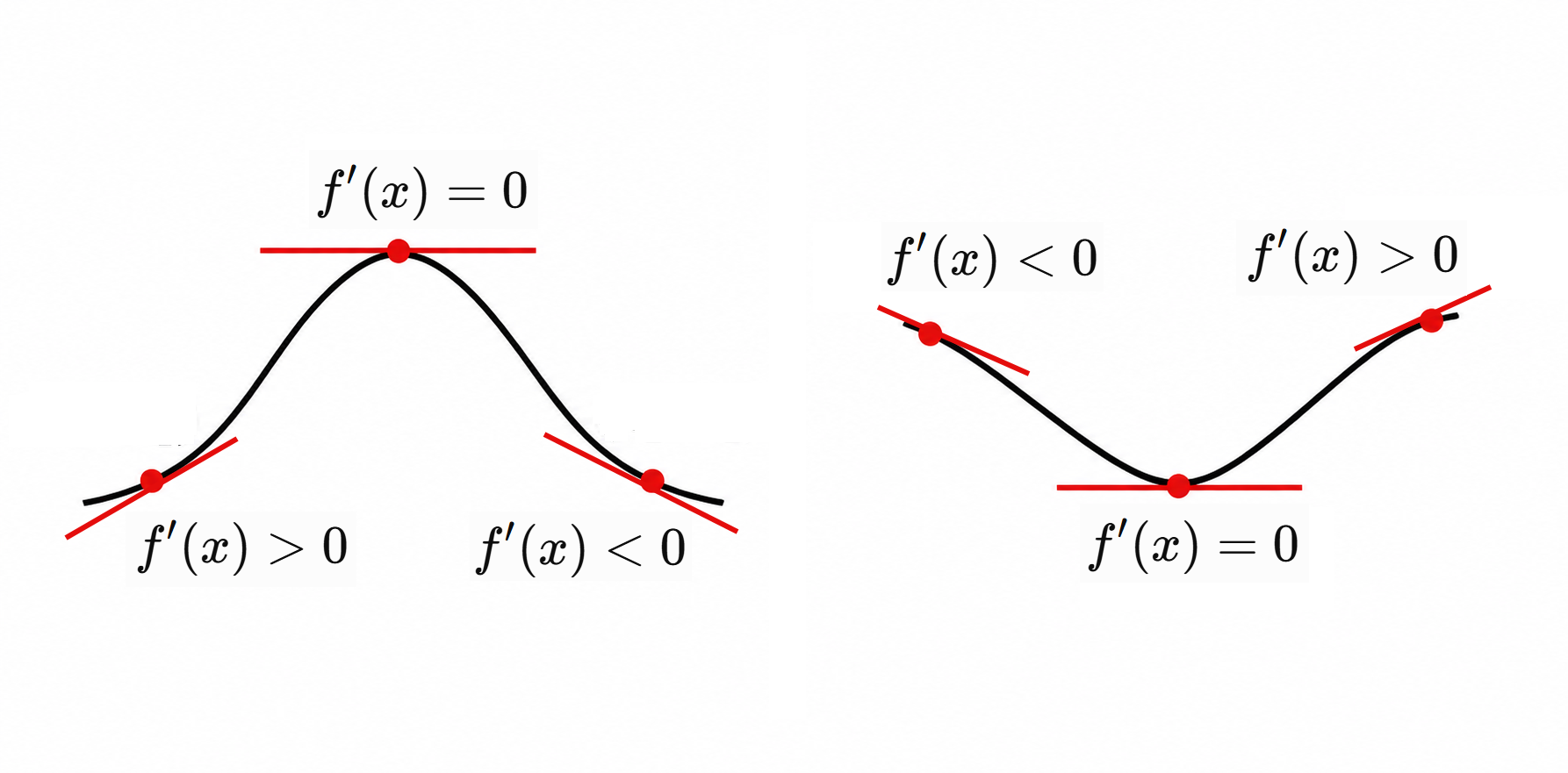
Using the definition,
Therefore,
For a positive integer ,
Hence,
Therefore,
Add and subtract :
Thus,
For
let
Then
so
Differentiate
Differentiate
Using the product rule,
Differentiate
Differentiate
Differentiate
Find the equation of the tangent line to
at .
First,
Also,
so
Therefore the tangent line is
or
Find the local extrema of
Thus the critical points are
The sign of is
so
is a local maximum and
is a local minimum.
If
the tangent line at is horizontal.
But this does not necessarily mean that is a local maximum or minimum.
For example,
We have
but is neither a local maximum nor a local minimum.
A function can have a local maximum or minimum even when
does not exist.
For example,
has a minimum at , but does not exist.
The derivative of is called the second derivative:
It describes how the slope itself is changing.
If
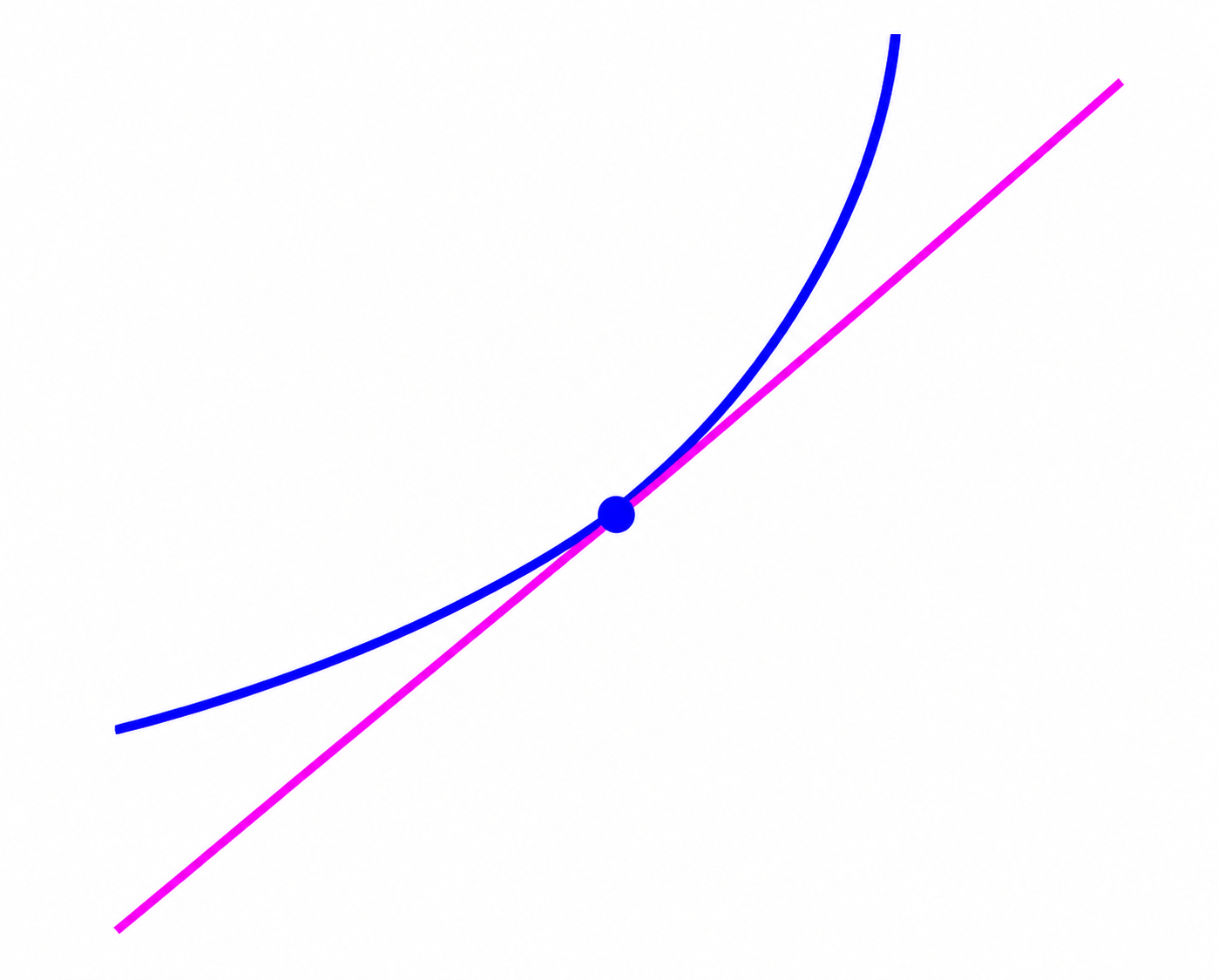
the graph is concave up.
If
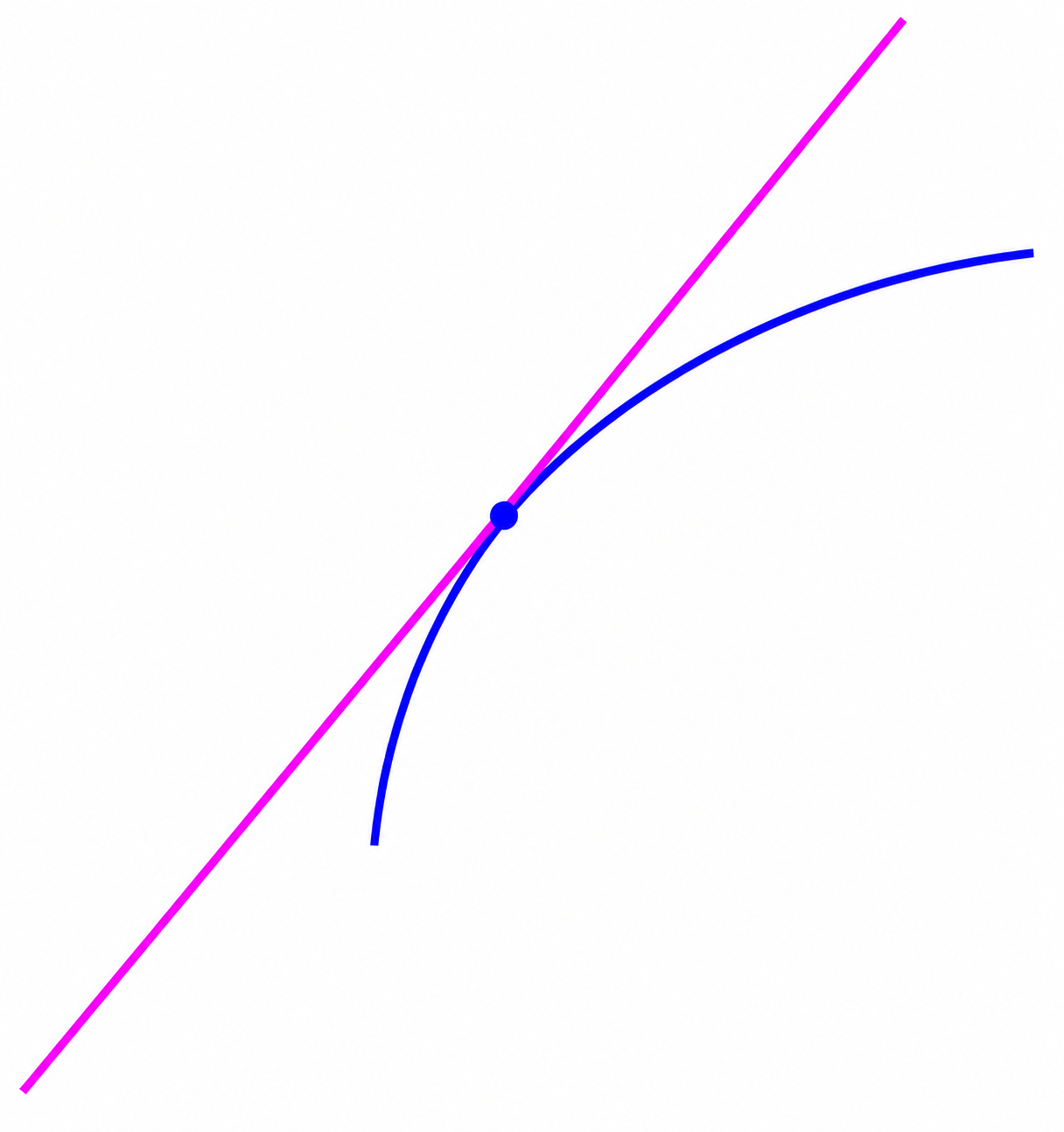
the graph is concave down.
If
then
while
If
the test is inconclusive.
An equation does not have to be written as .
For example,
Differentiating both sides with respect to ,
so
The quotient
is an average rate of change.
Taking
gives the instantaneous rate of change.
If is differentiable at , then is continuous at .
However, the converse is false.
For example,
is continuous at 0 but not differentiable there.
For finding extrema, do not consider only
A critical point can also occur where
does not exist, provided is defined there.
So the better statement is:
On an interval,
and
For extrema, the change of sign is important:
This is false.
has
but no extremum at 0.
When finding an absolute maximum or minimum on
check:
not just the solutions of .