Angle Bisector Plane
Lesson · Intermediate
Geometry: Coordinate Geometry
Angle Bisector Plane
The set of points that are equidistant from two intersecting planes consists of their two angle-bisector planes
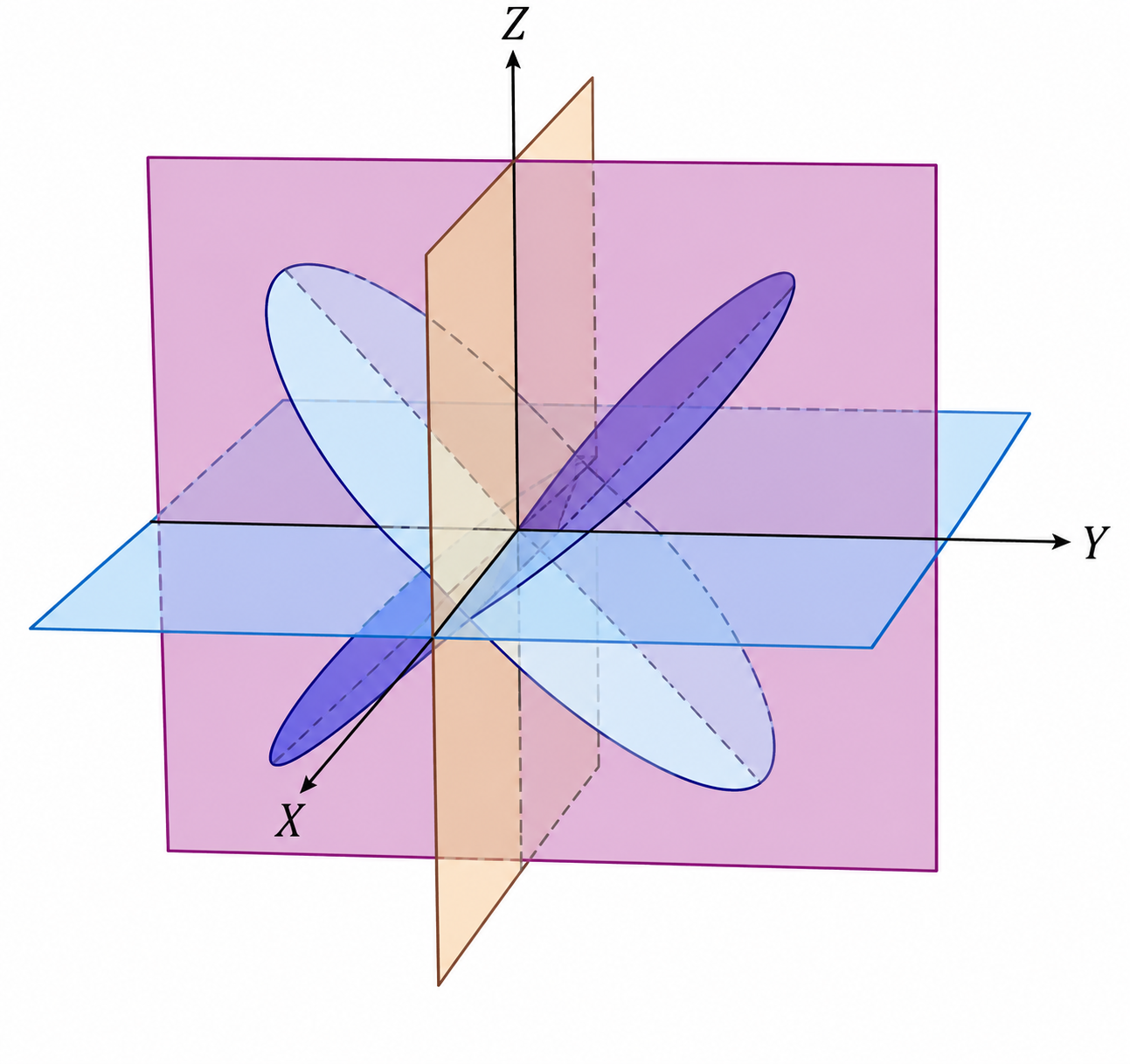
Suppose the two planes are
A point P=(x,y,z) lies on an angle-bisector plane when its distances from the two planes are equal
Therefore the two angle-bisector planes are
Find the angle-bisector planes of
and
For the positive case
For the negative case